
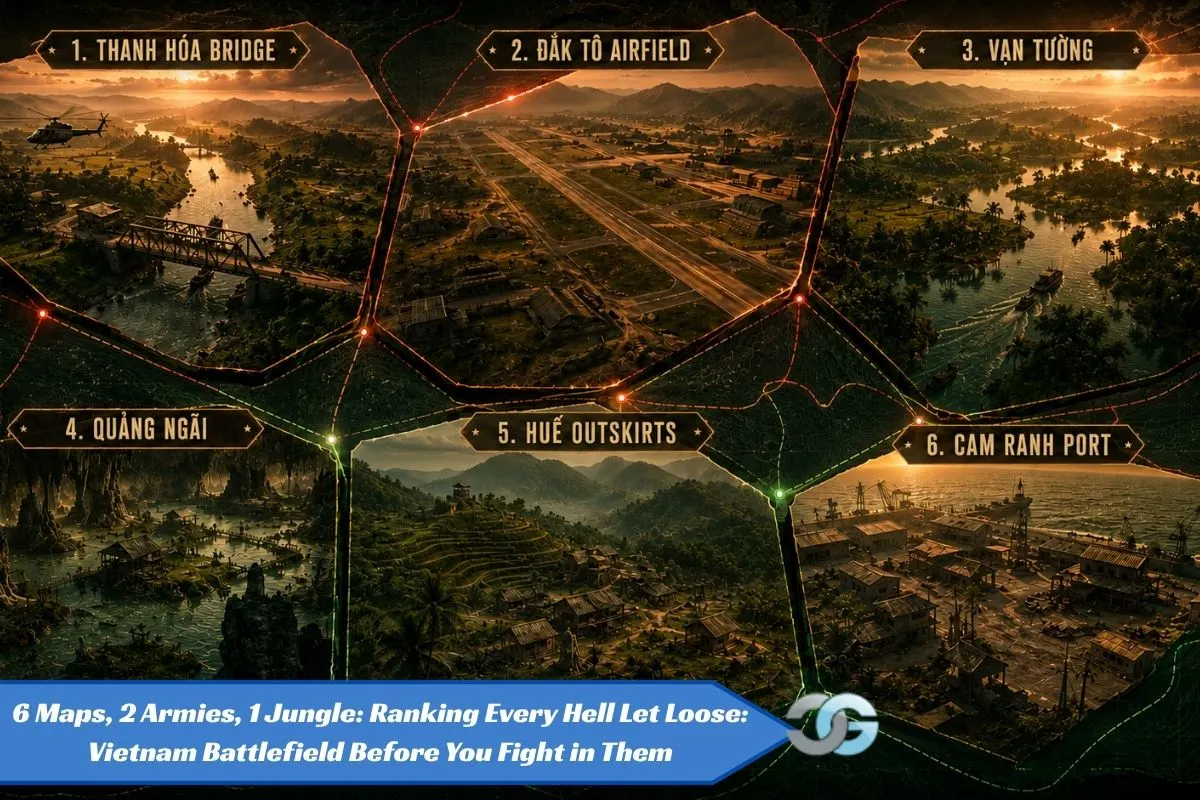
6 Maps, 2 Armies, 1 Jungle: Ranking Every Hell Let Loose: Vietnam Battlefield Before You Fight in Them
Six battlefields. Two armies that fight completely differently. Zero campaigns, zero bots, and zero mercy.
Hell Let Loose: Vietnam launched on August 13, 2026, with a six-map launch roster that feels genuinely different from most tactical shooters. Each battlefield draws inspiration from a real Vietnam War operation and transforms it into a 50v50 combat zone where helicopters, rivers, jungle terrain, and tunnel networks can matter just as much as your aim.
Before you jump into your first match, here’s every launch map ranked by how brutal, tactical, and distinctive it can feel on the battlefield.
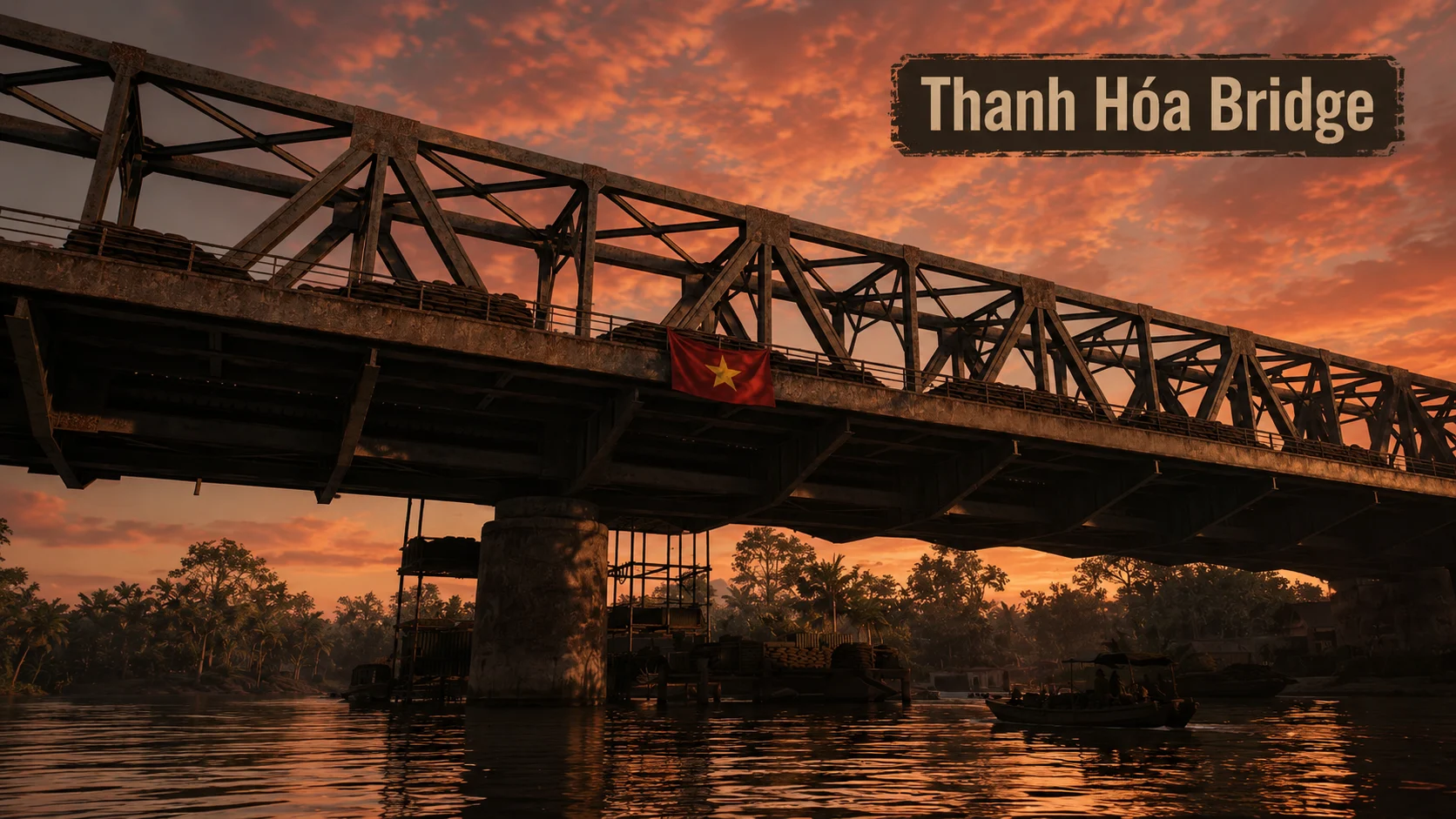
1. Thanh Hóa Bridge — The Bridge That Wouldn’t Fall
Based on the real “Dragon’s Jaw” bridge, Thanh Hóa Bridge is one of the most recognizable locations in the game. The bridge was one of the most heavily fortified targets during the actual Vietnam War, and it became the game’s Open Beta map for good reason.
The Nam Ma River cuts directly through the battlefield, creating brutal river crossings and intense cross-river firefights. Mountains provide elevated positions for snipers, while villages and trainyards create opportunities for close-quarters combat and jungle ambushes.
Why it ranks #1: Thanh Hóa Bridge brings together almost everything that makes Hell Let Loose: Vietnam interesting — river combat, close-range battles, jungle fighting, and elevation-based sniping — in one battlefield.
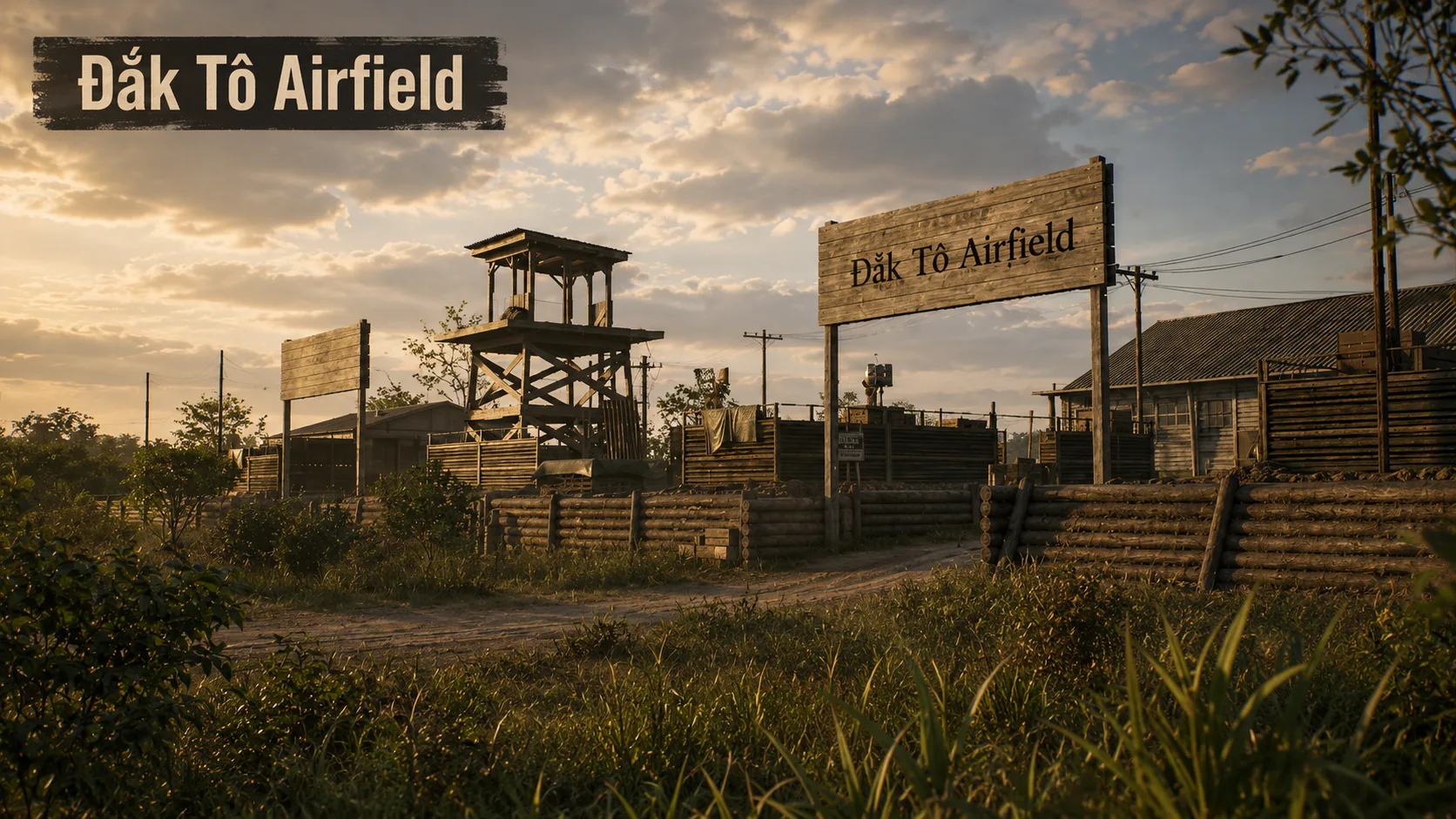
2. Đắk Tô Airfield — Cross the Runway, Take the Risk
Set in Vietnam’s Central Highlands and inspired by the real Battle of Đắk Tô, this battlefield revolves around a huge, exposed, artillery-cratered runway surrounded by dense jungle and elevated ridgelines.
The airfield itself is extremely dangerous territory. Crossing it without proper support can leave you completely exposed, making control of the surrounding high ground essential.
This is where reconnaissance, communication, and coordinated pushes become especially important. Charging forward alone can quickly turn into a one-way trip.
Why it ranks #2: It offers one of the strongest contrasts in the entire lineup — wide-open, exposed combat directly beside dense jungle concealment. Players constantly have to adjust their tactics depending on where the fighting moves.
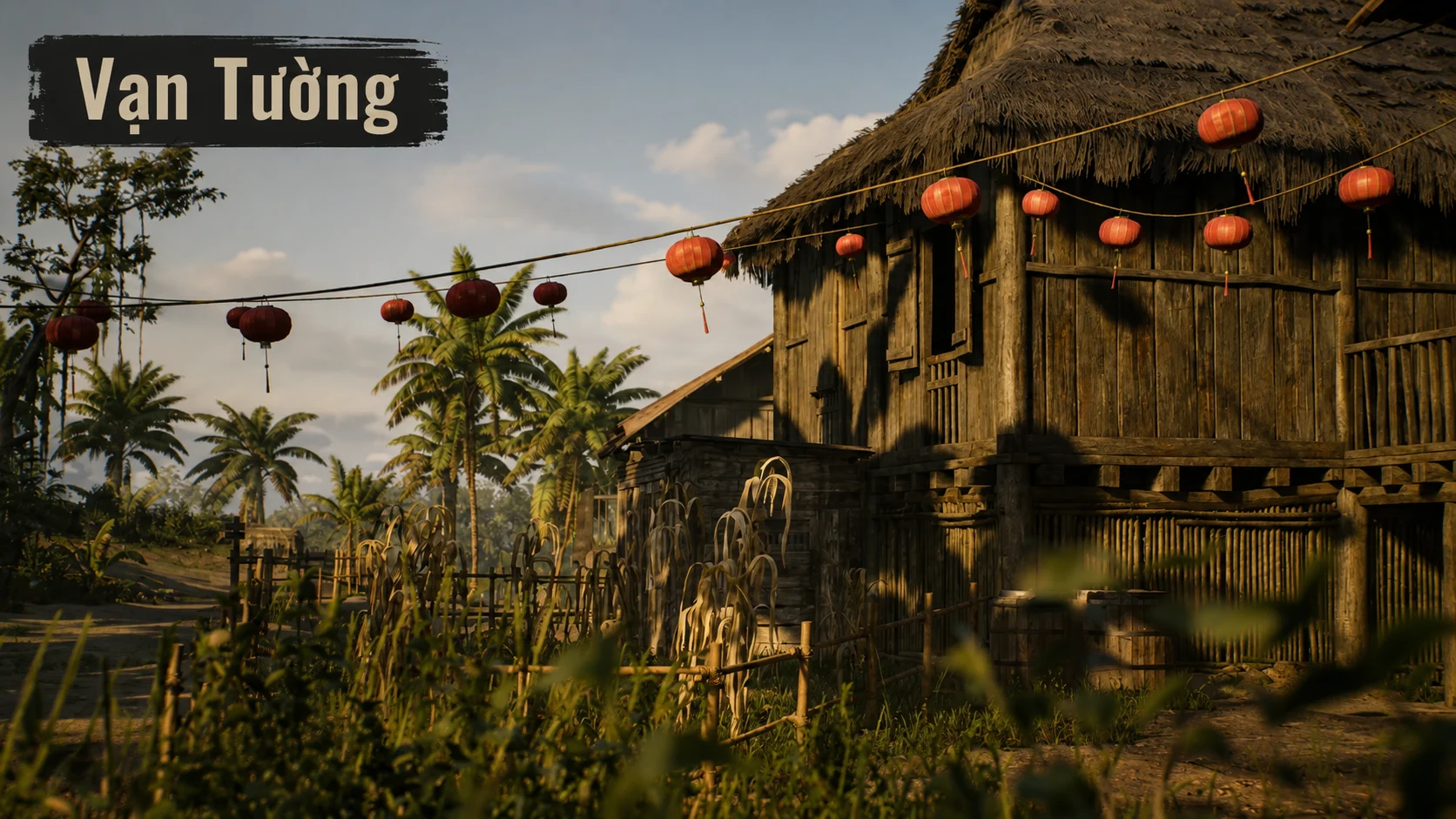
3. Vạn Tường — Where the Boats Decide the Battle
Inspired by Operation Starlite, the real amphibious assault near Chu Lai, Vạn Tường combines small villages, thick jungle, and a genuine river system.
This is one of the maps where the game’s vehicle systems can completely change how a battle develops. US helicopter insertions and amphibious tactics can open routes that an enemy may not expect.
Patrol boats aren’t simply transportation here. They can provide a fast way to flank enemy positions and approach areas where defenders are expecting an infantry assault.
Why it ranks #3: Vạn Tường rewards players who understand that the battlefield isn’t limited to roads and footpaths. Rivers, helicopters, and boats can become major tactical weapons.
4. Quảng Ngãi — Mud, Caves, and No Mercy
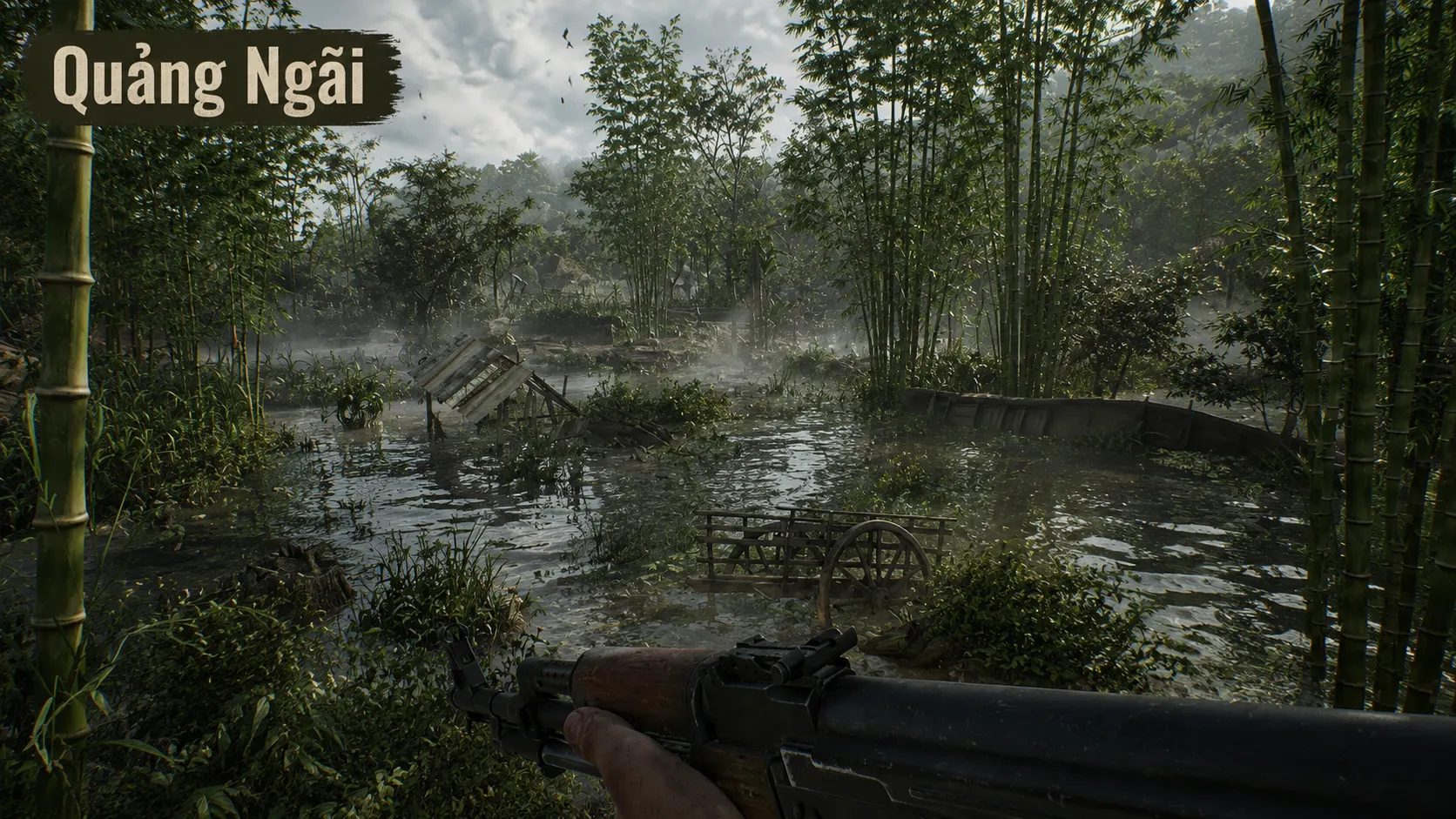
Quảng Ngãi is arguably the most hostile environment in the launch lineup. The map combines typhoon-level flooding, cave systems, and open lowlands, creating a battlefield where the environment itself becomes another enemy.
Imagine moving through knee-deep water while enemy fire rains down from elevated positions. That’s the kind of pressure this map can create.
Your squad’s ability to communicate and move together becomes extremely important because isolated players can quickly become easy targets.
Why it ranks #4: It’s arguably the most physically demanding and environmentally punishing battlefield in the lineup. Quảng Ngãi feels genuinely different, although its harsh conditions won’t appeal to every player.
5. Huế Outskirts — Tight, Vertical, and Claustrophobic
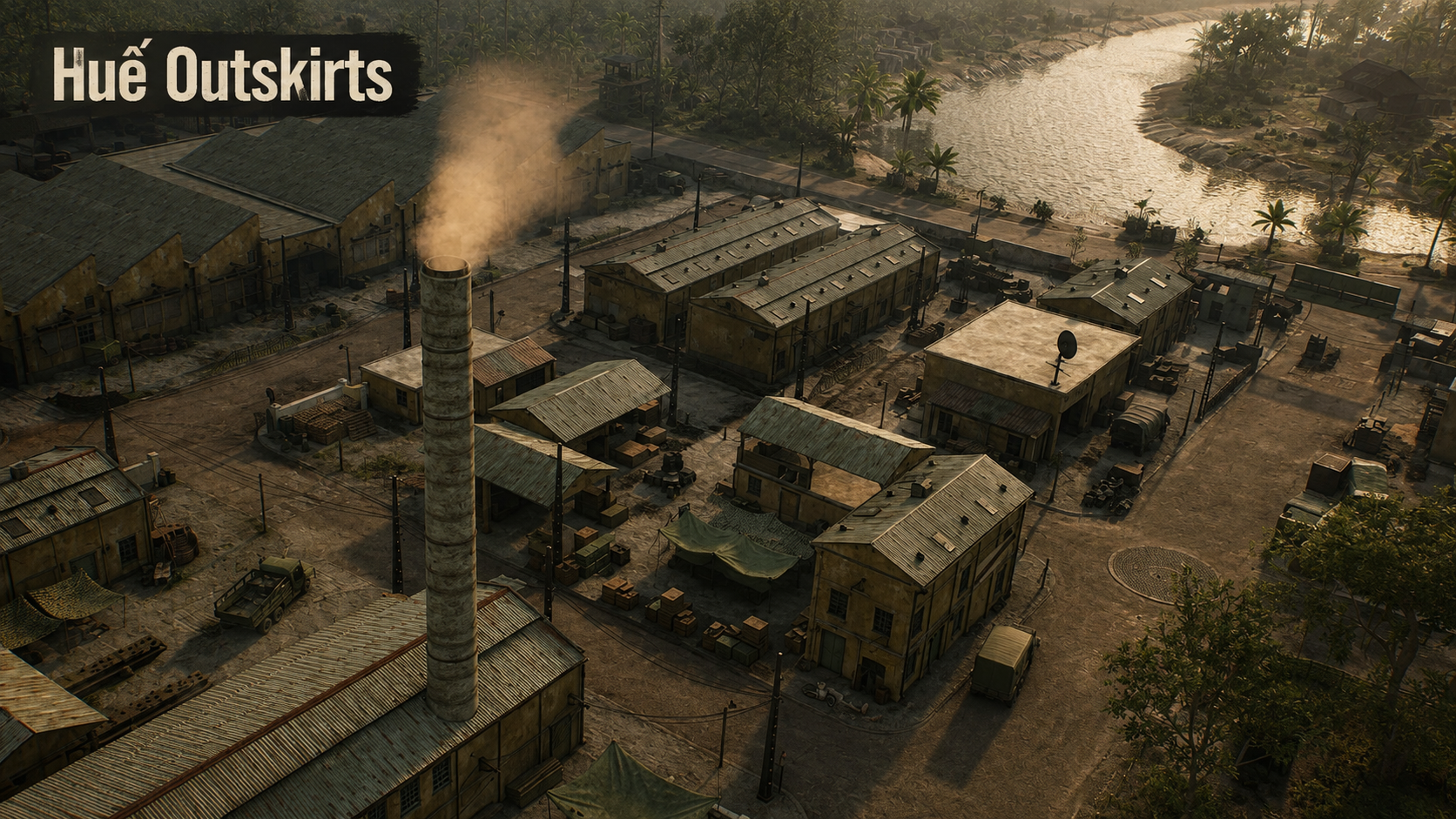
Huế Outskirts takes a different approach from the game’s sprawling jungle and river battlefields. Terraced fields and industrial complexes create tighter spaces and more vertical combat.
The result is a battlefield that feels considerably more confined than maps such as Vạn Tường or Thanh Hóa Bridge. Combat can become intense quickly, with players having less room to maneuver.
Why it ranks #5: Huế Outskirts is well designed for the close and vertical combat it aims to deliver, but it sacrifices some of the large-scale vehicle and terrain-driven warfare that makes the other maps stand out.
6. Cam Ranh Port — The Dockyard Grind
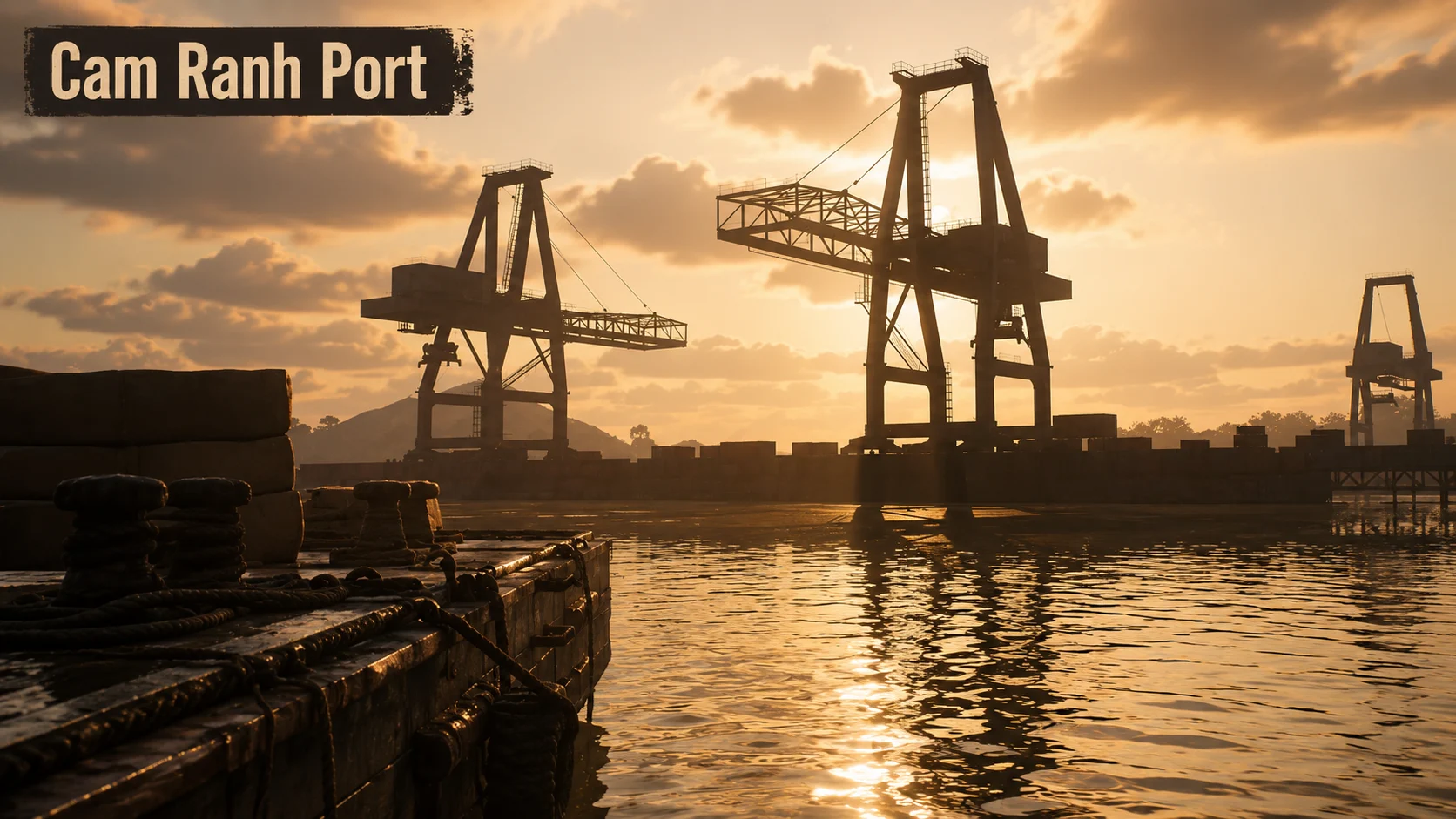
Inspired by the real Cam Ranh Bay Logistics Facility, a heavily used Air Force and Navy base, Cam Ranh Port combines militarized docks, creeks, and dunes.
The environment creates a mix of boat-based movement and close-quarters dockyard firefights, giving players a more compact combat experience compared with some of the game’s larger jungle battlefields.
Why it ranks #6: Cam Ranh Port is a solid battlefield, but its close-quarters encounters feel somewhat more familiar compared with the distinctive vehicle-and-terrain gameplay offered by the other maps.
One Thing to Know Before Ranking the Maps Yourself
There’s an important detail to remember when comparing these battlefields.
None of the maps are exact 1:1 recreations of their real-world locations. Expression Games used period photography, historical records, and topographical data as references, but the developers reshaped rivers, objectives, and vehicle routes to create balanced 50v50 battles.
That means locations such as Thanh Hóa Bridge and Đắk Tô Airfield are inspired by real, documented battles, but they should be viewed as history-inspired battlefields rather than museum-accurate recreations.
Why the Map You Learn First Actually Matters
The importance of these maps goes beyond simply knowing where you’re fighting.
Hell Let Loose: Vietnam doesn’t have a traditional campaign, bots, or an offline mode. That means your battlefield experience revolves around these maps and the real players fighting alongside and against you.
Learning how each map works can make a major difference. Some environments reward infantry tactics, others favor vehicles, while elevation, rivers, jungle cover, and tunnel networks can completely change how you approach an objective.
Understanding those differences can help you move from feeding kills to actually contributing to your team’s victory.
A Strong Addition to Your PS5 Library
If you enjoy large-scale, historically grounded tactical warfare, Hell Let Loose: Vietnam sits comfortably alongside some of the best PS5 games in the military-shooter space.
Its combination of 50v50 battles, historically inspired environments, asymmetric armies, vehicles, jungle warfare, and tactical teamwork gives it a distinct identity.
For players building a serious PlayStation games collection, it’s an interesting addition — particularly if you prefer coordinated military combat over fast, arcade-style shooting.
Where to Buy It
Before jumping into the battlefield, it’s worth comparing where you’re purchasing the game. Launch titles can be expensive at full retail price, so checking legitimate discounts can help you get better value.
Platforms such as GamesCard can be useful for players looking to buy PS5 games at discounted prices rather than automatically paying full retail.
And with six very different battlefields waiting for you, learning the maps early could be the difference between becoming another easy target and becoming the player your entire squad depends on.
FAQ’s
How many maps does Hell Let Loose: Vietnam launch with?
Six large-scale maps: Thanh Hóa Bridge, Đắk Tô Airfield, Vạn Tường, Quảng Ngãi, Huế Outskirts, and Cam Ranh Port.
Which Hell Let Loose: Vietnam map is best for beginners?
Thanh Hóa Bridge is the most familiar option since it was the Open Beta map — most players already have a sense of its layout before their first ranked match.
Are the maps exact recreations of real Vietnam War locations?
No — they’re inspired by real operations and battles (like Operation Starlite and the Battle of Đắk Tô) but adapted and reshaped for balanced 50v50 gameplay rather than historical accuracy.
Will more maps be added after launch?
Yes — additional maps are planned as free post-launch updates, expanding beyond the six confirmed at release.
Is Hell Let Loose: Vietnam worth buying at launch?
If large-scale, historically grounded tactical shooters are your thing, yes — checking sites like GamesCard for a PS5 games discount before buying is a smart way to pick it up without paying full retail.
Can you fly helicopters in Hell Let Loose: Vietnam?
Yes — Hell Let Loose: Vietnam introduces the franchise’s first-ever controllable helicopters, available exclusively to US forces. They’re used for troop insertions, supply drops, reconnaissance, and aerial fire support, while the NVA counter with buildable tunnel networks instead — part of the game’s asymmetric faction design.
What are the PC system requirements for Hell Let Loose: Vietnam?
Minimum requirements are Windows 10 64-bit, an Intel Core i5-10600K or AMD Ryzen 5 3600X, 16 GB RAM, an Nvidia RTX 2060 Super or AMD RX 6600 XT, DirectX 12, and 30 GB of storage. For the recommended spec, you’ll want Windows 11, an Intel Core i5-12600K or AMD Ryzen 5 7600X, and an Nvidia RTX 3060 Ti or AMD RX 6900 XT, with storage needs staying the same at 30 GB.
How many roles are there in Hell Let Loose: Vietnam?
There are 17 specialised roles in Hell Let Loose: Vietnam, covering Command, Infantry, Recon, Armour, Helicopter, and Mortar units.
What vehicles are available in Hell Let Loose: Vietnam?
Hell Let Loose: Vietnam features helicopters, tanks, and heavily armed patrol boats, with helicopters operated by US forces and patrol boats used by both factions.
Are helicopters exclusive to the US faction in Hell Let Loose: Vietnam?
Yes. Helicopters are exclusive to the U.S. faction in Hell Let Loose: Vietnam, while the NVA relies on tunnel networks for mobility.